New paper: A phase-field model for quasi-dynamic rupture nucleation and propagation of in-plane faults
Our paper, co-authored with Prof. Ahmed E. Elbanna at the University of Southern California, on a phase-field model for quasi-dynamic rupture nucleation and propagation of in-plane faults has been published in the International Journal for Numerical and Analytical Methods in Geomechanics.
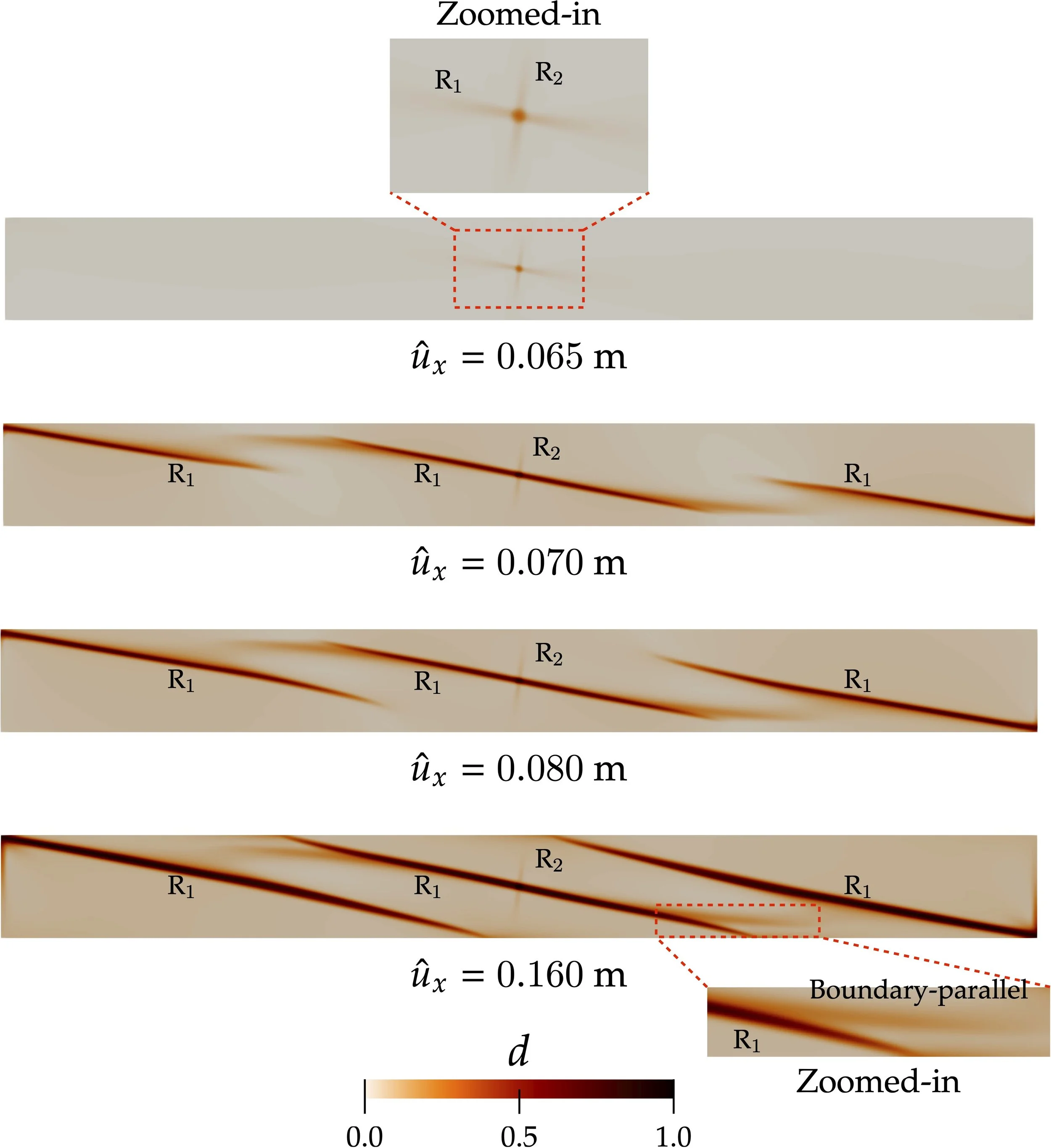
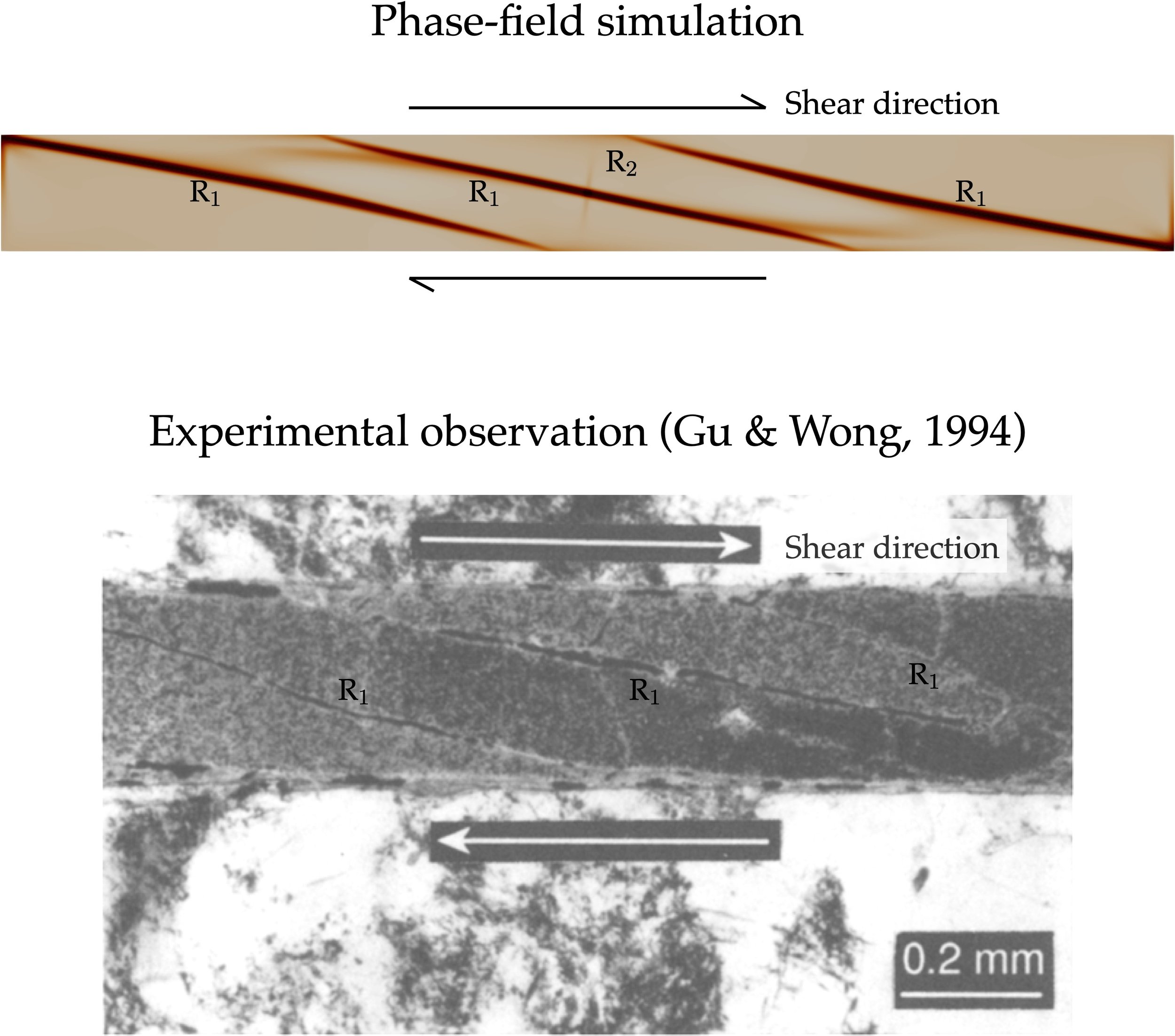
Abstract: Computational modeling of faulting processes is an essential tool for understanding earthquake mechanics but remains challenging due to the structural and material complexities of fault zones. The phase-field method has recently enabled unified modeling of fault propagation and off-fault damage within a fracture-mechanics-based framework. However, its capability has been restricted to simplified anti-plane settings. In this study, we extend the phase-field method to in-plane faulting by introducing two key advancements: (i) the incorporation of enhanced fault kinematics and pressure-dependent shear strength for a more accurate representation of fault behavior, and (ii) a revised fault propagation criterion that explicitly accounts for the coupling between shear strength and normal stress. The proposed formulation is verified against standard discontinuous approaches to quasi-dynamic fault rupture under in-plane conditions and validated using experimental observations and numerical data on nucleation and propagation of fault slip surfaces and associated localized damage zones. Simulations incorporating structural complexities and material heterogeneities demonstrate the robustness and versatility of the phase-field model, establishing it as a powerful tool for investigating the interactions between fault zone properties and earthquake processes.